Flu Season Playbook: Keeping Your Children Healthy This Winter
November 4, 2026
The Mental Game: Stress Skills Every Student Athlete Needs
November 6, 2026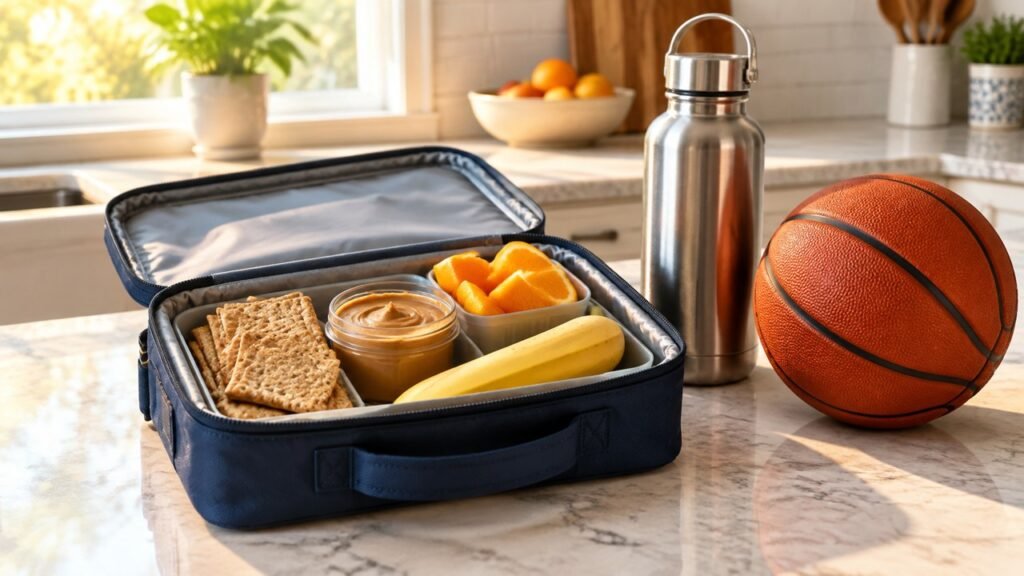
By The Redeemer Sports
Every parent of a student athlete holds at least three unofficial jobs: driver, scheduler, and, whether you asked for it or not, team nutritionist. What your player eats and drinks around practices and games shapes how they feel, how they recover, and how much they enjoy the season.
The American Academy of Pediatrics offers practical guidance for exactly this job, built for busy families rather than professional training tables. The core ideas are simple: a balanced everyday diet, smart timing around exercise, water first, and real skepticism about supplements and energy drinks. Here is the playbook.
Key takeaways
- Time the meals: About 3 to 4 hours before exercise, an athlete should eat mostly carbohydrates with a moderate amount of protein.
- Hydrate on a schedule: A 70-pound child should drink about 8 to 10 ounces of water 2 to 3 hours before exercise, plus 6 to 8 ounces right before, and about 3 to 4 ounces every 15 minutes during activity.
- Water wins: Plain water, along with milk, is the best everyday drink choice for children. Sports drinks only earn a place for activities lasting longer than 1 to 2 hours or in very hot conditions.
- Energy drinks are out: The AAP says energy drinks are not recommended for children because they contain caffeine and excess sugar.
- Skip the supplements: Dietary supplements do not go through FDA approval for safety or effectiveness before they are sold, and studies find high rates of contamination with possibly harmful substances.
The daily foundation beats the game-day meal
What happens at the dinner table on an ordinary Tuesday matters more than any single pre-game meal. The AAP describes a well-balanced diet as a mix of carbohydrates, proteins, and fats, with essential micronutrients: calcium, vitamin D, B vitamins, iron, zinc, magnesium, and antioxidants like vitamin C.
Children in sports are growing bodies doing extra work. Regular meals with real food, eaten together when schedules allow, cover nearly all of what a young athlete needs. The AAP even offers a scheduling trick for families who can never sync up at night: make your family meal breakfast. Everyone is more likely to be home at the same time in the morning, which makes it easier to gather around healthy food before the day scatters.
The game-day timeline
Three to four hours before exercise: a meal that is mostly carbohydrates with a moderate amount of protein. Think pasta with chicken, rice and beans, or a turkey sandwich with fruit.
During long events: for most practices and games, water is enough. Sports drinks can help replenish carbohydrates and electrolytes only for activities lasting longer than 1 to 2 hours, or in very hot environments.
After the final whistle: a snack rich in carbohydrates and protein helps rebuild and restore muscles. The AAP’s example of an energy-efficient combo: a carbohydrate like crackers paired with a protein like peanut butter. Chocolate milk, yogurt with fruit, or a turkey wrap work the same way.
For the car: no matter how long you will be out, the AAP suggests always keeping a piece of fruit or a healthy protein or nut bar with you. The hungriest moment of the day for a young athlete is usually the ride home, and what is in the bag decides what they eat.
Hydration, by the numbers
Children do not always drink enough on their own, so the AAP’s guidance gives parents actual numbers to work with:
- A 70-pound child should drink about 8 to 10 ounces of water around 2 to 3 hours before exercise; a teenager or adult should have 12 to 20 ounces.
- Another 6 to 8 ounces directly before exercise helps.
- During activity, encourage a small amount of fluid, about 3 to 4 ounces, every 15 minutes.
For everyday drinking, plain water is the best choice, along with milk. It is also the economical choice: tap water costs far less than sports drinks, sodas, and juice. Getting children in the habit of drinking water before they are thirsty starts at home, and parents who drink water themselves are the best advertisement.
Two products deserve a firm answer. Sports drinks are for long or very hot sessions only, not the sideline default. And energy drinks, which contain caffeine and excess sugar, are not recommended for children at all.
A word on supplements
At some point, most young athletes will be offered a shortcut: a protein powder, a creatine tub, a “recovery” product marketed at teenagers. The AAP’s parent guidance is blunt: shortcuts like performance-enhancing substances and supplements are of little benefit and can be dangerous.
Parents should know two facts. Dietary supplements are regulated by the FDA, but under federal law they do not go through FDA approval for safety or effectiveness before they are marketed. Manufacturers are responsible for their products’ safety, and the FDA’s role is largely postmarket enforcement. Separately, studies examining supplement purity find high rates of contamination with possibly harmful substances. A balanced diet covers what growing athletes need; a powder with a logo does not add anything worth the risk.
The bottom line
Sports nutrition for children is not complicated, but it does reward planning: real food on ordinary days, carbs plus protein on the right timeline, water on a schedule, and a hard pass on energy drinks and supplements. For the bigger picture on pacing a young athlete’s season, see The Sports Parent’s Playbook, and for the everyday habits underneath it all, Healthy Habits for Children: Movement, Sleep, and Food. Recovery matters as much as fuel; our student athletes read about that in The Student Athlete’s Edge.
A clinician’s note: These are general guidelines for healthy young athletes. Children with diabetes, food allergies, celiac disease, or other conditions need individualized plans from their own clinician or a registered dietitian, and any child with signs of disordered eating, such as skipping meals, fixating on weight, or, for female athletes, missed periods, should be seen promptly.
Frequently asked questions
Does my child need a sports drink at practice?
Usually not. The AAP says sports drinks can help replenish carbohydrates and electrolytes for activities lasting longer than 1 to 2 hours, or in very hot environments. A typical one-hour practice calls for water. And energy drinks are a different product entirely: caffeine and excess sugar, not recommended for children.
Should my young athlete take protein powder or creatine?
The AAP’s guidance for parents says performance-enhancing substances and supplements are of little benefit and can be dangerous. Dietary supplements do not go through FDA approval for safety or effectiveness before they are sold, and purity studies find high rates of contamination with possibly harmful substances. A balanced diet with adequate protein from food is the safer, evidence-backed route for growing athletes.
What should my child eat before a morning game?
The AAP recommends a meal of mostly carbohydrates with moderate protein about 3 to 4 hours before exercise. For early games, that often means breakfast: oatmeal with fruit, eggs and toast, or yogurt with granola. If timing is tight, a lighter carb-forward snack closer to the start is better than playing on a full stomach or an empty one.
What is a good post-game snack?
Pair a carbohydrate with a protein. The AAP’s example is crackers with peanut butter; yogurt with fruit, chocolate milk, or a turkey sandwich work the same way. The goal after exercise is rebuilding and restoring muscles, and the combination of carbs plus protein does that better than either alone.
Sources
- American Academy of Pediatrics, HealthyChildren.org, Sports Nutrition for Busy Families and Busy Lifestyles (pre-exercise meal timing and composition; post-exercise carb-plus-protein snacks; ounce-by-ounce hydration guidance; sports drinks only beyond 1-2 hours or in hot conditions; energy drinks not recommended; family breakfast tip): https://www.healthychildren.org/English/healthy-living/nutrition/Pages/Sports-Nutrition-for-Busy-Families-and-Busy-Lifestyles.aspx
- American Academy of Pediatrics, HealthyChildren.org, Choose Water for Healthy Hydration (plain water and milk as best drink choices; drinking water before thirst; cost comparison with sweetened drinks): https://www.healthychildren.org/English/healthy-living/nutrition/Pages/choose-water-for-healthy-hydration.aspx
- American Academy of Pediatrics, HealthyChildren.org, Performance-Enhancing Sports Supplements: Information for Parents (supplements of little benefit and potentially dangerous; contamination findings): https://www.healthychildren.org/English/healthy-living/sports/Pages/Performance-Enhancing-Substances.aspx
- U.S. Food and Drug Administration, Questions and Answers on Dietary Supplements (FDA does not approve dietary supplements for safety before they are marketed; manufacturers are responsible for product safety; FDA role is largely postmarket enforcement; current good manufacturing practice requirements): https://www.fda.gov/food/information-consumers-using-dietary-supplements/questions-and-answers-dietary-supplements
Source pages retrieved November 5, 2026.
This article is for education only and is not medical or nutrition advice. It summarizes American Academy of Pediatrics guidance for healthy young athletes and may not fit your child’s individual needs, allergies, or medical conditions. Talk with your child’s clinician or a registered dietitian about a plan for your family.